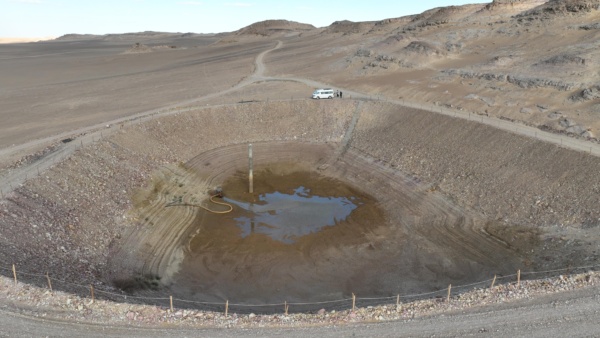
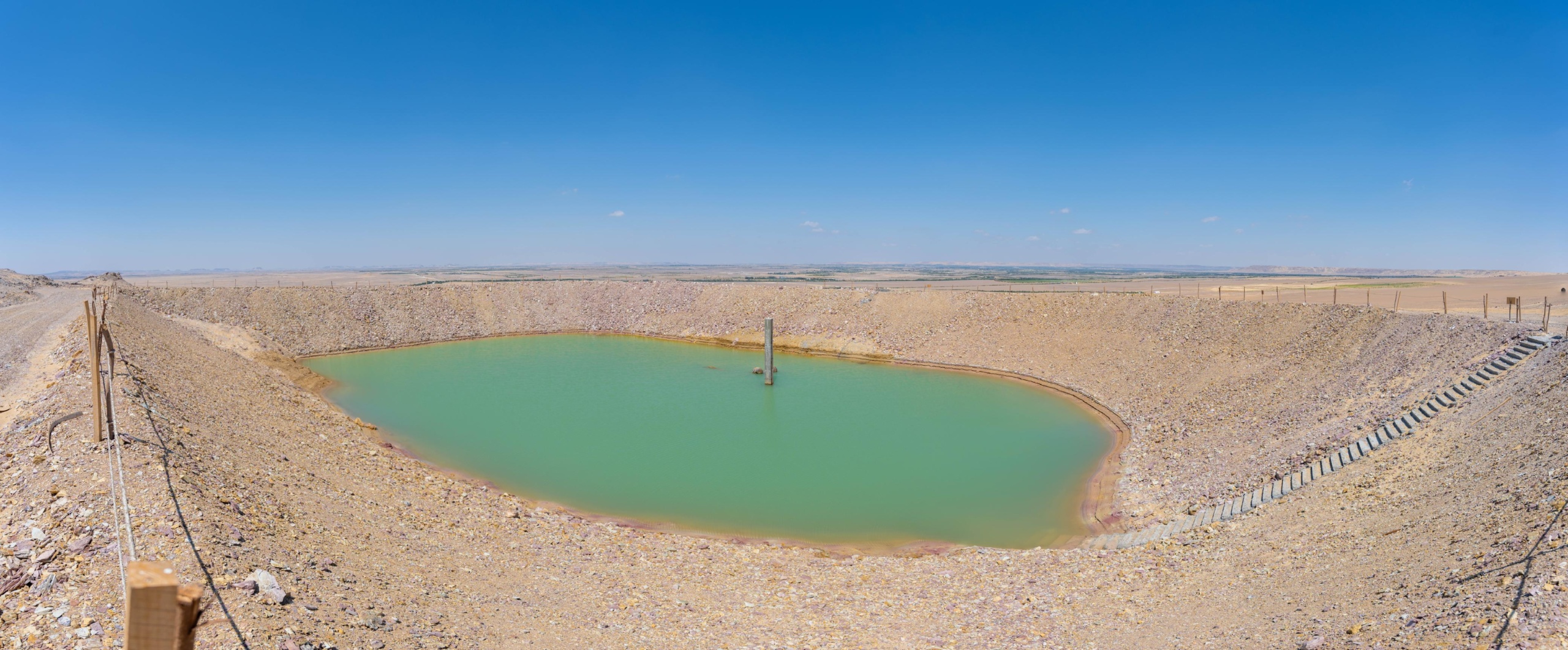
The pilot stored daytime solar energy as elevation and irrigated at night by gravity from an ~10,000 m³ reservoir, with day irrigation serving as the comparison. Across wheat, basil, and beans, night irrigation delivered 14–20% water savings, 14–20% yield increases, and 24–30% less water per kilogram of product (m³/kg). Monitoring confirmed reduced evaporative losses and steadier application under cool night conditions.
An early challenge—reservoir seepage despite clay sealing—was resolved using a  plastic liner, ensuring reliable storage. To consolidate learning, we developed student materials—teaching modules and short films—that support ongoing training at the desert farm and demonstrate the system to visitors. Awareness efforts continue, and we encourage wider adoption.
Financial relevance: Water saved enables tree planting. Trees, combined with organic practices and renewable pumping, can generate carbon credits, offering a complementary revenue stream that strengthens farm economics and supports scaling of climate-smart practices.
Interested in implementation? Please contact EBDA (Egyptian Biodynamic Association).
This first-of-its-kind regional system has concluded successfully after three years, financed by DEG.